TWU’s Contribution to the Nation: Febb Ensminger Burn — The Letter That Changed the Constitution
July 16, 2026 2026-07-16 11:40TWU’s Contribution to the Nation: Febb Ensminger Burn — The Letter That Changed the Constitution
TWU’s Contribution to the Nation: Febb Ensminger Burn — The Letter That Changed the Constitution
In the summer of 1920, a quiet voice from East Tennessee helped shape the course of history for an entire nation.
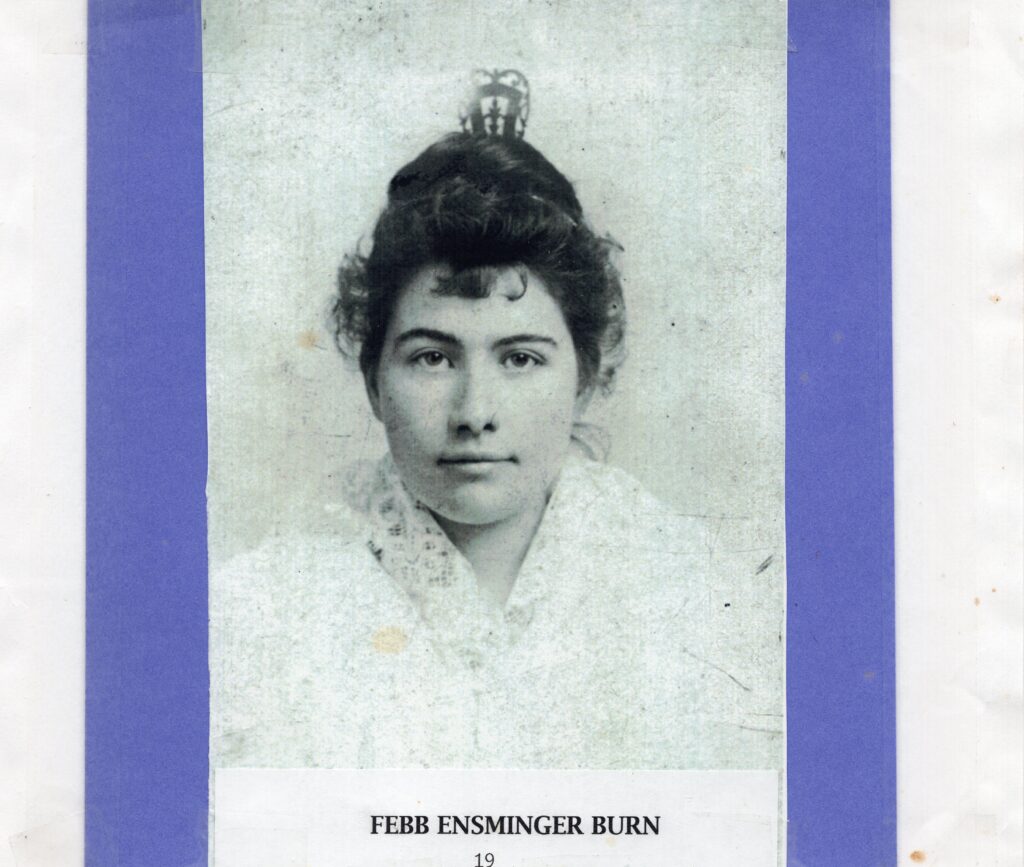
That voice belonged to one Phoebe “Febb” Ensminger Burn, a woman whose influence would reach far beyond her home in Niota, Tennessee, and into the very framework of the United States Constitution.
Born in 1873, Febb came of age in a world that offered limited opportunities for women. Her path, though, was shaped by something uncommon for her time: education. She attended U.S. Grant Memorial University in Athens, a predecessor of today’s Tennessee Wesleyan University, where she became part of an early tradition of coeducation at a time when few institutions welcomed women into the classroom.
That education helped form a woman who read widely, thought critically, and paid close attention to the world around her. Known for keeping up with current events and reading multiple newspapers a day, Febb developed a deep understanding of the political issues shaping her time. Still, she herself had no legal voice in the ballot box.
After college, she became a teacher, one of the few professional paths open to educated women of her era. She later married James Lafayette Burn and built a life centered on family, work, and community. Together, they raised four children, including a son, Harry, who would one day find himself at the center of a historic decision.
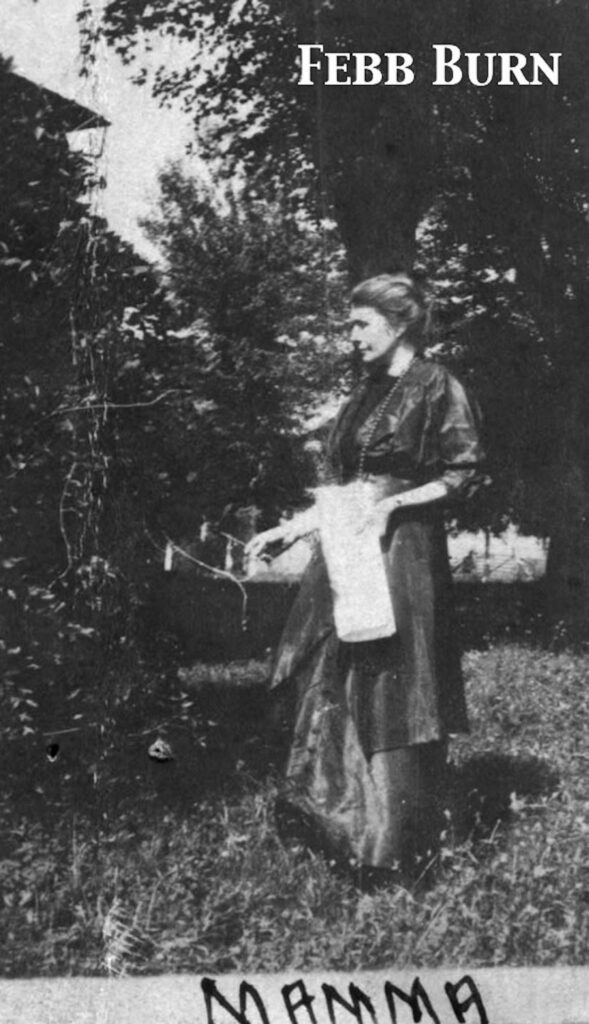
When her husband died in 1916, Febb took on even greater responsibility, managing the family farm and continuing to guide her household. Her life was quiet, defined not by public recognition but by quiet leadership and thoughtfulness. That would completely change in 1920.
By that summer, the movement for women’s suffrage had reached a defining moment. Thirty-five states had ratified the 19th Amendment, and just one more was needed to secure its place in the Constitution. Tennessee became the final battleground. Inside the state legislature, the vote was uncertain.
Febb’s son, Harry Burn, a young representative from McMinn County, was among those whose decision could determine the outcome. Publicly, he appeared aligned with those opposing ratification. Privately, though, he carried something with him into the chamber: a letter from his mother.
In that letter, Febb wrote simply the following: “Hurrah and vote for suffrage and don’t keep them in doubt.”
And in a line both simple and powerful, she added: “Don’t forget to be a good boy…”
On August 18, 1920, as the roll was called, Harry Burn made his choice – he voted in favor of ratification.
With that single vote, Tennessee became the 36th state to approve the 19th Amendment, ultimately securing its adoption and granting millions of American women the right to vote.
Harry explained his decision in words that pointed directly back to his mother’s influence, citing that a mother’s advice is often the safest guide.
Febb was not an elected official. She did not stand on the legislative floor. Yet her voice, shaped heavily by her education and deep understanding of the world, helped tip the balance at a pivotal moment in American history.
When pressured later to deny or minimize her role, Febb refused. She stood by her words and by her belief in the importance of women’s suffrage, demonstrating the same resolve that had guided her throughout her life.
In October 1920, she became the first woman to register to vote in McMinn County, and in November, she cast her first ballot. It was a full-circle moment: a woman who was once denied a voice in democracy was now participating in it, knowing she was what made it possible. 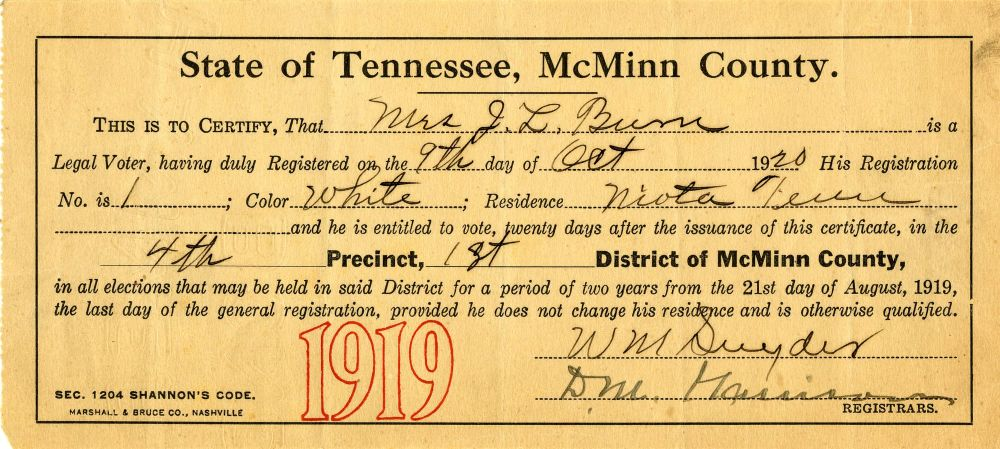
At Tennessee Wesleyan University, Febb Ensminger Burn represents a legacy that continues to live on. In her honor, the university established the Febb Burn Society of Women Philanthropists, recognizing and supporting women who embody the same spirit of leadership, love of education, and initiative that defined her life.
As part of “TWU’s Contribution to the Nation,” her story stands as a testament to the true power of leadership and resilience, demonstrating how one quiet voice can be powerful enough to change a whole nation.