
TWU’s Contribution to the Nation: Carrol Summerfield Long – from Athens to Nagasaki
July 9, 2026 2026-07-09 9:02TWU’s Contribution to the Nation: Carrol Summerfield Long – from Athens to Nagasaki
TWU’s Contribution to the Nation: Carrol Summerfield Long – from Athens to Nagasaki
Long before the internet and smartphones made global connections commonplace, one man from Athens, Tennessee, set out across the world with a calling that would carry him far from home.
His name was Carroll Summerfield Long, a student of Tennessee Wesleyan’s early days whose life would become a bridge between cultures and continents alike.
Born in 1850, Long began his journey with ambitions of studying medicine while attending what was then called East Tennessee Wesleyan College. As his path unfolded, though, so did his purpose. He realized that he was drawn to ministry, and he answered a different kind of calling that was rooted in faith, service, and a desire to share compassion with others.
By 1872, he was licensed to preach. His work took him into the pulpit and the classroom. Before long, that calling would lead him somewhere few from his hometown had ever gone.
In March of 1880, Long and his wife, Flora, arrived in Nagasaki, Japan, a country undergoing profound transformation during the Meiji era. While it was a challenging moment of cultural exchange and uncertainty, Long embraced it fully.
Determined to connect with the people of Nagasaki, he immersed himself in the Japanese language and culture. Within just a few months, he was preaching in Japanese, fully committed to understanding and engaging with the people around him. Over the next eight years, Long’s work would leave a lasting mark.
Serving as a missionary and later as a presiding elder, he helped guide Methodist efforts in Nagasaki and Nagoya during a formative period of Christian outreach in Japan. Still, his impact extended beyond the church because he was, at heart, an educator.
In 1881, Long helped establish Cobleigh Seminary, and in 1888, he founded a school for girls in Nagoya. To Long, part of the broader vision was that education could open doors and create lasting change. Through these institutions, he contributed to the early foundations of Methodist education in Japan.
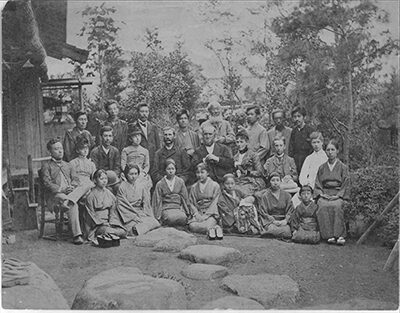
Sadly, his work was not without sacrifice. The demands of missionary life, combined with ongoing health challenges, eventually led Long back to the United States in 1890. Later that year, at just forty years old, his life came to an end. Yet his story did not end with death.
Through his writings — diaries, letters, photographs, and records — Long left behind a vivid account of his experiences. Today, those materials offer a window into a pivotal moment in history, documenting not only missionary work but the human connections formed across cultures during a time of change and limited abilities for cross-world connections.
At Tennessee Wesleyan University, Carroll Summerfield Long’s story stands as a testament to a legacy that reaches far beyond geography.
As part of “TWU’s Contribution to the Nation,” Long represents a global legacy of faith and service. From Athens to Nagasaki, from classroom to community, his life reflects the power of stepping beyond the familiar to make a difference in the wider world, forming friendships wherever one may be led.